Friday, September 01, 2006

Al-Hijab (The head scarf in Quran)

Note: This post has been revised in a later post here. To get the bigger pictures one might want to read this one first, and then the revision.

I think the most common error people make when interpreting the Quran is not paying attention to context. Taking one ayah out of context could easily render the interpretation false. The most obvious example for this is in soorat al-ma'oon (107)
Ayah number 4 God says" Fa Waylon lil mossaleen" "فويل للمصلين " [ Woe to those who worship/pray ] . This ayah taken out of context simply means be careful not to pray. One would think that God doesn't like those who pray. Which we know contradicts many other versus in the Quran stressing the importance of praying. But if we put this back in context the meaning becomes more sensible and in accordance with the rest of the book. I will talk more about context in another post.

Let us get back to the topic at hand. The Hijab or head scarf in particular. As I know there are three main verses which traditional Muslim scholars use to argue that Hijab is obligated by God. One is in soorat al Noor (24) Ayah/verse 31. The other two are in Soorat Al-Ahzaab. The first one is Ayah/verse 33 which specifically talks to the Prophets wives, and the second one is Ayah/verse 59.

I shall discuss Ayah 31 of soorat Al-Noor first and quickly. The English translation according to www.al-islam.com is :

[31] And say to the believing women that they should lower their gaze and guard their modesty; that they should not display their beauty and ornaments except what (must ordinarily) appear thereof; that they should draw their veils over their bosoms and not display their beauty except to their husbands.

For this arguments purpose I shall not get into details about the English translation, but the text in question is highlighted above. God only commands women to hide their bosom or Chest area. The word in Arabic used was Jaib. Jaib is commonly referred to nowadays as the pocket. Which I believe was still the name for pockets back in the old days. Only pockets were commonly placed in the chest area versus the pants or jacket for example. The argument to support this claim is the Quran itself uses the word Jaib in two other versus. Both referring to Moses
(PBUH) and one of the Miracles God taught him when he was sent to the pharaoh. God asked Moses (PBUH) to insert his hand into his pocket (which the Bible refers to as the chest area as well) and then take it out to perform the Miracle.

Therefore this Ayah (31:24) clearly is asking Muslim women to cover their bosoms and not referring to covering the hair.


Now as to Ayah 33 in Soorat/Chapter Al-Ahzaab clearly is referring to the Prophets wives only. Proof of that is stated in the verse just before it when God says: " يانساء النبي لستن كأحدٍ من النساء" "Oh women of the prophet , ye are not like any other women." Therefore, these versus clearly cannot be used as an argument to tell other women what they should or should not do.

Finally Ayah 59 of soorat Al-Ahzaab, which probably both traditional scholars and I both agree to be the Ayah were Hijab is most clearly stated in. However, below you will find a point of view not many people talk about. It had occurred to me while reading the Quran and trying to understand it. I think most Muslims have a bad habit with reading the Quran in passing. Not really trying to figure out the message. They simply rely on what old school of thought (or ignorance) tells them.

Little do they know that when God is judging us, they will bare responsibility for their actions and not the scholars. As the Quran clearly states in so many places.

Back to the point of view I mentioned. Let us look at the context of this Ayah and in fact the whole Soorah. This Soorah is clearly Madaniyah ( Revealed in Madinah). The title means the parties or Allies. This is a well known battle that Muslims were attacked by Quraish and other Allies in Madinah. It also talks about the Jews of Banu- Qaynuqaa and their betrayal of the treaty. It talks
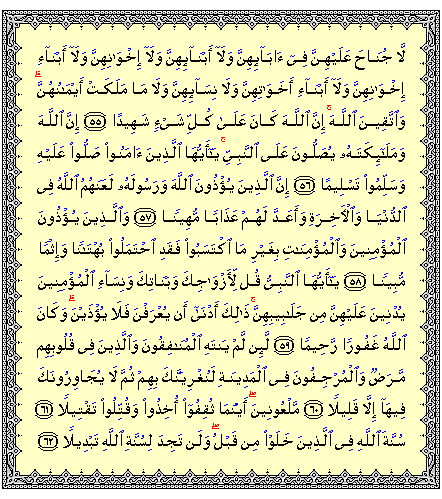
about the Monafiqoon (hypocrites) whom were hiding their disbelief. It also talks about some social aspects in Madinah. Moreover, there are some versus specifically talking to the Prophet PBUH.

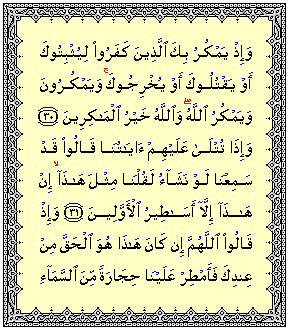
Then we come to the versus in question. Namely, 57, 58, 59, and 60. All are displayed in the figure on the right of this text.

We begin with Ayah 57 which serves as a transition between talking about the Prophet PBUH to talking about those who hurt the believers. Which brings us to ayah 58 loosely translates into : "And those who hurt the believers unjustly will bear responsibility for their actions and sins" " ".
Finally Ayah 59
" يَا أَيُّهَا النَّبِيُّ قُلْ لأَزْوَاجِكَ وَبَنَاتِكَ وَنِسَاءِ الْمُؤْمِنِينَ يُدْنِينَ عَلَيْهِنَّ مِنْ جَلابِيبِهِنَّ ذَلِكَ أَدْنَى أَنْ يُعْرَفْنَ فَلا يُؤْذَيْنَ وَكَانَ اللَّهُ غَفُورًا رَحِيمًا " "Oh Prophet instruct your wives, daughters and women believers to cover themselves up with their outer garments so that they shall not be known and thus hurt, and God is Forgiving and Merciful" . Here we note the words so that they shall not be known (identified) and thus hurt. Therefore, God has stated a reason for the cover. Further investigation and pondering of this Ayah reveals the meaning well. I was puzzled when I read this Ayah at first. I thought: OK if all women covered up they will not be identifiable however, won't those who wish to hurt them still know that they are Muslims? It then becomes apparent that for the Muslim women not to be harassed they need to blend in. They need to dress up like other women and therefore not be subject to harassment. How was that possible? It is simple, they would dress like other women in Madinah namely like Jewish women. If one examines the Jewish women's dress code historically and in modern times. It is easy to see that specifically from portraits of Mary the mother of Jesus and other women from her time. Therefore, wearing like other Jewish women in Madinah would help Muslim women blend in and therefore not be subject to harassment.

In conclusion, this means that once Muslim women live in their own society where Muslims are the majority there will no longer be a need for them to cover up their hair. It is a practice that God commanded and has given us the reason. Now that the reason has passed I see no point in covering the hair. Of course if women wish to cover up let them feel free to do so. It is their prerogative. However, this comes to the matter where Muslim women live in the west. Especially in the post 9/11 world. If a Muslim woman feels threat or harassment for wearing a veil and being a Muslim then this is going against the logic behind Ayah 59. God clearly makes protecting women from harm the priority. Therefore, in my opinion women should try to blend in. Of course not bearing skin, showing their bosoms and wearing provocative clothes. As long as it doesn't go against the other commands from God in other versus.

This of course is my humble opinion and I would love to hear some comments.

Wednesday, August 23, 2006

I had to be a Witness ...

I had to be a Witness to see it so clearly. The title may not suggest what I intend to discuss; however,I am trying to capture the readers attention by it.

While I was attending a Sales and Communication course this morning, I had an epiphany. It made me visualize first hand how the Ahadith (Plural Hadith) have little credibility.


Our instructor was trying to emphasize the importance of taking notes and listening. So he made the group do the following exercise:

He asked 7 people to leave the room first, and then explained the exercise. He was going to read the remaining group (I was one of them) a short story which had a few details. Then he would ask one person to come back into the room. After that he would read the story to the first person alone while asking him not to talk, take notes, nor ask questions; but rather just listen.

Once he finished telling the story to the first person, he asked the second person to walk in the room and asked him again to listen. Only this time, he asked the first person to tell the story as he remembers it. Then asked the third person to walk in and so on ....

As one can imagine, this story went from someone's ear to his tongue and then to another's ear ... By the time the last person restated the story as he remembered, it was a lot shorter, had erroneous details, and even the main message was lost.

Now all of this happened within 20 minutes to half an hour, if not less. I urge whomever is reading this to experiment with this if they can find a willing group of people (9 or more).

Of course after witnessing this, it dawned on me ... Isn't this how the Hadeeth is supposed to have been passed along?

Now is it possible to assume that the Hadeeth is not prone to errors knowing what we know now? After all it was narrated by at least 5 different people over almost 220 years and not 20 minutes.

Therefore, Muslims should not base their lives on Ahadith, nor let it be the base of their religion.

NOTE: To be fair most Ahadith are probably a bit shorter than the story we were told. However, the exercise is still very much valid.


Of course most Muslims reading this will quickly go into denial, start throwing accusations at me and so on. After all how can something they have believed in for so long could be prone to error? How can something their fathers and their great grand fathers have believed in for so long be wrong? How?

The Quran scorns people who have that kind of attitude and gives examples about them. I shall talk about that in a future post.

Now with what I said so far, many people would give me excuses about how Arabs had great memory back then, etc ...

Fine, that's not the only argument I have to state to support my claim. The next argument is, why didn't the Prophet Peace be upon Him order "Katabat il Wahi" his literate loyal followers to write his Ahadeeth (traditions) down? In fact Muslim scholars tell you that he deliberately asked them to refrain from that - then they go on explaining the reason as to not have that mixed with the Quran. The question the becomes: Why do Muslims choose to ignore such an order; while they are so adamant on growing their beards because the Prophet pbuh "commanded them" for example?

My third argument would be to take the Ahadeeth themselves and scrutinize them. One would easily find many contradictions amongst the ahadeeth. I will list some as proof later on.

My fourth argument is that although not many, but some Ahadeeth even contradict the Quran. Ironically some Muslims would rather listen to the Hadeeth than the Quran. Thinking that the Hadeeth is more clear and easier to understand.

My fifth argument is that Muslims believe Christianity and Judaism to be God's religions. We also believe that the Old Testament,and New Testament were God sent in the past; however Muslims say that they have been tampered with or forged if you will ... Either through error or deliberate manipulation. My question is this then. If the Torah was a God sent holy book which lost its purity and was forged, by what logic do you think that Hadeeth is immune to such possibilities?

Finally the last argument is, that Sunna and Shiia both have Haeeth which each group believes in. Neither of the two recognize the others ahadeeth and in fact they don't recognize most of the narrators or Sahaba the followers of The Prophet. Regardless of which group you sympathize with or belong to. Either they are both wrong, or one of them is wrong while the other is right. Regardless of who is right if any, the point is that one of the Ahadeeth collection is error prone and politically motivated. Therefore, has no credibility.

I don't like to go into the Shiia/Sunna debate here. This is not the post for it. I just would like to say that I believe in Islam and only Islam prior to the death of Mohammad pbuh.


I shall leave you with my humble opinion:

I believe the Quran to be the basis for Islam and for it to be your Guide. I do find Ahadith interesting to read specifically those ones that predict the end of time.

Wa Alsalamo Alaikom ...

Wednesday, August 16, 2006

They conspire and plot , then God plots - يمكرون و يمكر الله -

I am a firm believer in the Quran as a divine book. During the next few posts I shall try to discuss a few ideas about a perfect society if you will or necessary behavior for a people to achieve prosperity.

Of course to achieve the ultimate goal of defeating your enemies and securing your existence, you need to have support from the Most Powerful, the Greatest and the Most Capable God. To achieve that support is what should be your first priority.

Through out history many people have claimed God's favor. Often those claiming his favor are on opposite sides of a battle. Which makes you ask the question, is God really on your side?
The answer is logical, God does not love you because you belong to a group. God does not love you because you belong to a certain race, and believe it or not God does not love you if you follow a certain religion. God will love you based on your actions. God judges you based on your actions, therefore God loves those who please him with their deeds.

I shall discuss this matter in coming posts maybe with references from the Quran. But for now I have this to say:

In Ayah 30 of the Anfal verse:

Which is translated by al-islam.com as:

"Remember how the Unbelievers plotted against thee, to keep thee in bonds, or slay thee, or get thee out (of thy home). They plot and plan, and Allah too plans, but the best of planners is Allah."

I just remembered how Israel planned and plotted to target Sayid Abbas Al-Mosawi and killed him. I saw the remains of the car he was killed on the news back in 1992. Like most people I didn't know much about Hezbollah back then. Like most people I was weary of them, since I assumed that they want to turn this whole world into a Muslim nation. However, unlike most people I was open minded enough to allow myself to learn the truth and not be blinded by assumptions or mass media influence.

Israel killed Abbas Al-Mousawi to cripple Hezbollah, only God knew what they had planned and he had a better plan as it turns out today. God had Sayid Nasrallah prepared for his duty to lead Hezbollah as a successor of Sayid Abbas may God have mercy on him.

Surely Israel today wishes it had never killed Sayyid Abbas and everyday wishes to kill Sayid Hasan. They will not be able to kill him until God wishes for his death.

Wednesday, June 07, 2006

Best Nation of People (Ideal Society)

How many Iraqis must die until Muslims start condeming the violence in the name of their religion?

Imagine living in Baghdad, when your neighbour or family member has been kidnapped, beheaded, lost a limb, or if they are lucky have died. Now tell me is it ok for a Muslim to kill your family memeber? A loved one? Is it what the Quran tells you oh Muslim brother to do this?
I would like to know which Ayah actually allows for such behaviour.
Please leave this Muslim brother a comment to enlighten me.

Also what are we doing about the ayah which says "Kontom Khair Ummatin Okhrijat lil-nas, ta'moroon bil ma'roof wa tanhawn a'n il monkar" "You were the best nation of people, for you command everything good and condemn every evil deed. "

So when will you try to live up to your religion?

Sunday, June 04, 2006

This Morning in Toronto

While the skeptic in me wonders if what we are told this morning in Toronto about a thwarted terrorist attack is true. I have no doubt that there are some people who are angry enough to want to commit such crimes. Especially young males.

People wake up. It is all too simple. Insight hatred between two rivals and you have a war. The role of the media and fundimentalist preaching or websites is one. One of which to insight hatred and blind zeal in order to prepare the minds of the weak to commit any act they are told to.

Muslims need to know once and for all:
Attacking innocent civilian targets serve no purpose practically and are forbidden by God. After all the biggest sins are well known, Al-Shirk (pageanism), Killing an innocent person ( katl -il Nafs illa bil 7aq), and Adultary (Zina). For all those Muslims who aren't sure what I am talking about, I urge you to read your Quran. I quote one Ayah in soorat Al-Forqaan 68-69 الفرقان

[68] Those who invoke not, with Allah, any other god, nor slay such life as Allah has made sacred, except for just cause, nor commit fornication, and any that does this (not only) meets punishment. [69] (But) the Penalty on the Day of Judgment will be doubled to him, and he will dwell therein in ignominy,


With that said, I know that today's story has one purpose and one purpose only. It is the precurser for a war yet to come. Whereby when the Canadian Army is asked to kill innocent Iranians or Syrians, they will have full public support behind them,

Monday, May 29, 2006

Yet Another Earthquake

Another Earthquake of a magnitude of 6.3 on the Richter scale struck this Saturday. According to the BBC, almost 4,900 died.

Last year I was discussing with my friends how the earthquakes seem to occur more frequently nowadays. I have this belief that we are nearing the end of days. Of course I am not alone in this belief; however, most people still think that this some sort of zealous thinking. An old wives tale or something of that sort.

There are many theories about the sign of the end of days. All three major religions talk about such a period. They may disagree on the details and outcomes; however all three share the same general concept.

I shall not get into any of the details in this post; however, I will point out that Earthquakes and natural disasters are common amongst them all.

Last year I decided to track the number of earthquakes and their frequency. As soon as I embarked on that journey, I found out that it wasn't that simple. After all, technically many Earthquakes occurs everyday. However, their magnitude may be low that humans do not feel its occurence. Therefore, the question arose, how can one track the frequency? Should I track Earthquakes with a magnitude greater than 6? If that was the case, I needed historical data. That wasn't hard to find either. In fact with some research I was able to come across articles which discuss frequency. Some suggested that the 70's experienced an increase andd so on ... While the frequency declined in following decades. There was no silver bullet.

Of course I dropped the subject after that and admitted to my friends that I had nothing to go on but personal beliefs. However, the frequncy of news reports on earthquake fatalities certainly is more frequent at least during my lifetime. Surely, we have better news coverage nowadays. However, is it that much different than what we had in the 80's ? How about the 90's ?

Either way, it might not be crystal clear today, I believe it surely will be five years from now. We are living in interesting times.

Monday, April 24, 2006

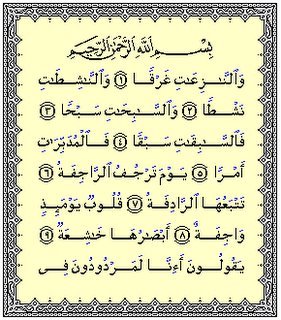
النازعات


وَالنَّازِعَاتِ غَرْقًا (1) وَالنَّاشِطَاتِ نَشْطًا (2) وَالسَّابِحَاتِ سَبْحًا (3)
فَالسَّابِقَاتِ سَبْقًا (4) فَالْمُدَبِّرَاتِ أَمْرًا (5) يَوْمَ تَرْجُفُ الرَّاجِفَةُ (6) تَتْبَعُهَا الرَّادِفَة 7

سبق و قد نشرت هذا المقال في اللغة الإنجليزية قبل أشهر عدة ولكن حين قرأته لا يتضح معنى الأيات كما أقصدها, لذا قررت أن أنشره بالعربية كذلك. فيه أحاول شرح تفسير معنى النازعات في القران. ليس كما فسرت بكتب التفسير القديمة إنما كرؤية جديدة إتضح لي معناها مؤخراً . قبل شرح الأيات سوف أسرد معاني المفردات في الآيات التي قد تكهن غير واضحة المعنى. أما المفردات مثل سابحات من المصدر سبح فهي لا تحتاج لأي توضيح.

إذاً لو نظرنا إلى الآيات من الآية الأولى إلى الآية السابعة نجد هذه المفردات اللتي قد تحتاج إلى تفسير


1 نازعات

2 ناشطات
3 الرادفة


أما الغرق والسباحه والسبق والرجف فالمعنى واضح وهي كلمات تستخدم يومياً في اللهجات العربية العامّة

أمّا النزع والنازعات فهي كلمة مستعملة في اللهجة العراقية العامّة وتستخدم بمعنى خلع الملابس أي ن


نزع الرجل حذاءه, ونجد هذا المعنى وارد في القران أيضاً في عدة مواضع أذكر منها الآيتين

- " نَزَعَ يَدَهُ فَإِذَا هِيَ بَيْضَاءُ لِلنَّاظِرِينَ " في سورة الأعراف اية 108
يَا بَنِي آَدَمَ لَا يَفْتِنَنَّكُمُ الشَّيْطَانُ كَمَا أَخْرَجَ أَبَوَيْكُمْ مِنَ الْجَنَّةِ يَنْزِعُ عَنْهُمَا لِبَاسَهُمَا
في سورة الأعراف آية ٢٧"27"
- " نَزَّاعَةً لِلشَّوَى "في سورة المعارج اية 16


أما الاية الأولى فهي تخبرنا عن موسى في الوادي حين كلمه الله تعالى. فأمره الله أن يدخل يده في جيبه ثم يخرجها لتصبح بيضاء. و معنى النزع هنا هو الخلع أيضاً , لكن بدلاً من خلع الثوب من اليد خلعت اليد من الثوب. أو بدلاً من نزع الثوب عن اليد نزعت اليد من الثوب أو الجيب.و ذلك يأتي بمعنى خلع اليد من مكانها في الجيب. أما المعنى الثاني في المثال الثاني فهو كمعنى النزع العراقية العامّة وهو مختص باللباس. بينما المعنى الثالث فهو نزع النار للجلد دون العظام. هذا المعنى وارد في التفاسير القديمة للقران كتفسير إبن كثير وغيرها.


أما المفردة الثانية النشط, فمعناها في العامة الشىء الكثير الحركة أو المداومة كقولنا إنه طالب نشيط. ففي معنى كثرة المداومة و عدم التكاسل. أما المعاني الأُخرى لنشط فنجدها كلاتي


نَشَطَ - [ن ش ط]. (ف: ثلا. لازم، م. بحرف). نَشَطْتُ، أَنْشِطُ، اِنْشِطْ، مص. نَشْطٌ. 1."نَشَطَ مِنْ قَرْيَتِهِ" : خَرَجَ مِنْهَا، غَادَرَهَا. 2."يَنْشِطُ مِنْ بَلَدٍ إِلَى بَلَدٍ" : يَتَحَوَّلُ، يَنْتَقِلُ. 3."نَشَطَتْ بِهِ الْهُمُومُ" : أَزْعَجَتْهُ، أَرْهَقَتْهُ. 4."نَشَطَ الْمَسِيلُ" : خَرَجَ عَنِ الْجَادَّةِ وَتَفَرَّقَ يَمْنَةً وَيَسْرَةً

وأخيراً قبل أن أبدأ بشرح الايات لنذكر كلمة الرادفة ففي المعاجم

رَدَفَ - [ر د ف]. (ف: ثلا. متعد). رَدَفْتُ، أَرْدُفُ، اُرْدُفْ، مص. رَدْفٌ. 1."رَدَفَ خُطُوَاتِهِ" : تَبِعَهُ. 2."رَدَفَ صَاحِبَهُ" : رَكِبَ خَلْفَهُ.

أي الشيء اللذي يتبع.

إذاً لنبدأ بشرح الايات:

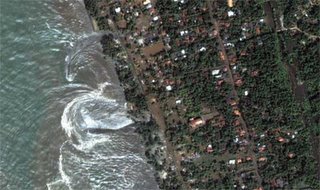
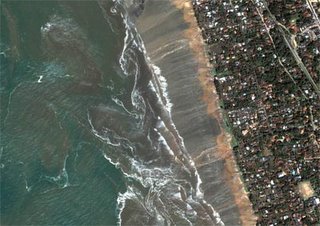
النازعات غرقا هي الموج المسمى بالتسونامي Tsunami فهذا الموج المائي ينزع ويخلع ويقلع كل ما على اليابسة من مكانه, فكيف يتم الخلع؟ يتم الخلع بالغرق وجعل الأشياء تحت الماء. و ما يثبت لنا هذا المعنى هي الايات الثانية والثالثة. فالاية الثانية تقول أن هذه النازعات ناشطة تخرج من مصدرها فتتحول و تتنقل من موضعها في البحار والمحيطات حتى تصطدم باليابسة. ففي العام 2004 خرجت الموجة من مصدرها قرب إندونيسيا حتى وصلت ساحل جنوب أفريقا. و هذا هو النشط الخروج من المصدر والتفرق في كل الإتجاهات حتى تصطدم باليابسة.أما كيفية التنقل فهو سبحاً بالماء كما تخبرنا الاية الثالثة.

في مقالاتٍ سبقت كََتبت عن التسونامي و تعريفه بعلم الأرض أو الجيولوجيا. إن شاء القارئ قرأ تلك المقالات أو بحث عن التعريف ومواصفات التسونامي بنفسه. في الصور والوصلة Link التالية يجد القارئ تدوين موجة المحيط الهندي المدمرة في عام2004 قبل و بعد الموجة.

وفي هذه الصورة نجد مدى تلك الموجة. و في الأسفل صورتان تصوران أثر النزع.


أمّا الاية الرابعة فتتكلم عن السابقات. والسابقات هي ليست وصف للنازعات. فحرف الفاء فيه تعقيب زمني. هنا أظن السابقات تعني مسبب التسونامي. فالتسونامي ممكن أن تنتج من الزلازل أو البراكين أو خسف في القشرة الأرضية. إذاً السابقات هي كل ما يسبق النازعات ويسببها كلمة سبق تثبت هذا المعنى. أما المدبرات أمراً فلست أعلم معناها لأن الله هو مدبّر الأُمور فأي شرح مني لهذه الاية هو تخمين. و أخيراً الايات السادسة والسابعة فهي تقع موقع الخبر فتخبرنا عن زمن وقووع النزع. ألا وهو يوم ترجف الراجفة , والراجفة هي الأرض يوم ترجف و تهتز كقوله تعالى "إذا زلزلت الأرض زلزالها" فبعد الرجف يأتي الردف أو الرادفة وهي تشير إلى النازعات هنا والله أعلم.

فيقول القرطبي عن الاية السادسة

وقيل : الجواب " يوم ترجف الراجفة " على تقدير ليوم ترجف , فحذف اللام . وقيل : فيه تقديم وتأخير , وتقديره يوم ترجف الراجفة وتتبعها الرادفة والنازعات غرقا .


إذاً بعد شرح الايات السابقة على حده نحاول تركيبها لنعلم معنى النازعات. تبدأ السورة بالنازعات و هي كلمة لم تستخدم من قبل كإسم لأي شيء في السابق حسب ما وصل إلينا من كتب. لذا فنجد المفسرون يخمنون انها الملائكة مستعنين بالأحاديث. لكن تلك الأحاديث أيضاً فيها إختلاف على معنى النازعات. فمنهم من يقول أنها النجوم, و منهم من يقول هي الموت, ومنهم من يقول هي الملائكة. كذلك نجد أن المفسرون يفسرون كل تلك الكلمات الغير وارده في المعاجم بالملائكة كالمرسلات والصافات ... الخ
إذاً لما لا نبحث عن معناها بالقرآن نفسه فنجد ذلك في تتمة الآيات. فهي تنزع بالغرق و هي ناشطه وهي سابحه فتسبقها سابقات ومدبرات تحدث هذه المدبرات يوم ترجف الأرض{تزلزل} فيتبع الرجف الرادفه {النازعات}. والنشط هو كثرة الحركة والطاقة والإنتشار في كل إتجاه والسفر من مكان إلى مكان وهي سابحة والسباحة تتم بالماء.


و الله أعلم ، فإن كان لدى القرّاء تعليق أرجو منهم التفضل بذلك والسلام.